
Small intestinal bacterial overgrowth (SIBO) is a complex condition where excessive bacteria in the small intestine disrupt digestion, cause bloating, and drive inflammation. While conventional options are available, many clinicians and patients are turning to herbals for a natural alternative.
Often recommended herbals to support GI health include oregano oil, berberine, allicin, and neem. Among these botanical interventions, oregano oil and berberine stand out as two of the most research-backed herbal interventions for SIBO. However, not all products are created equal—many supplement companies lack clinical data or standardization.
Oregano Oil: A Potent Broad-Spectrum Agent
Oregano oil, particularly its active component carvacrol, has been shown in studies to possess antibacterial, antifungal, and antiparasitic properties. One landmark 2014 study published in Global Advances in Health and Medicine compared herbal treatments for SIBO and found that a combination including oregano oil and berberine was highly effective in addressing SIBO, proven with breath test results.
Why oregano oil works:
- Disrupts bacterial cell membranes
- Broad-spectrum activity (Gram-positive and Gram-negative bacteria)
- Synergistic with other antimicrobials like berberine and garlic
Berberine: An Herbal Heavyweight
Berberine, an alkaloid found in plants like Oregon grape, barberry, and goldenseal, exerts strong antimicrobial effects by:
- Disrupting bacterial DNA
- Inhibiting quorum sensing and biofilm formation
- Modulating inflammatory cytokines
It’s been widely used not only in SIBO protocols but also in dysbiosis, candida overgrowth, and even metabolic disorders due to its blood sugar and cholesterol–lowering properties.
Dihydroberberine: A Next-Gen Upgrade
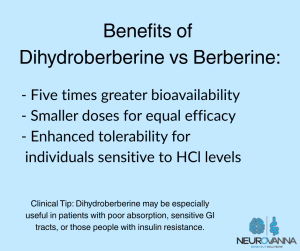
While traditional berberine HCl is clinically effective, it suffers from low bioavailability and may cause GI discomfort in sensitive individuals. For individuals with sensitive digestion, the high HCl content may limit tolerability.
Dihydroberberine (DHB) offers an alternative. As a neutral-charged, hydrogenated metabolite of berberine, DHB demonstrates up to five times greater bioavailability. This results from DHB’s ability to passively diffuse across cell membranes, bypassing the need for active transport. It also avoids first-pass hepatic metabolism, allowing smaller doses to deliver equal or superior therapeutic effects. Importantly, because DHB is not bound to hydrochloric acid, it tends to be much more tolerable for individuals with gastric sensitivity.
Clinical Tip: Dihydroberberine may be especially useful in patients with poor absorption, sensitive GI tracts, or those people with insulin resistance.
Allicin: Methane Gas Assassin
Methane-predominant SIBO (now often classified as IMO – Intestinal Methanogen Overgrowth) is notoriously harder to treat than hydrogen-dominant types. Allicin, the active antimicrobial compound in garlic, has shown impressive results in targeting methane-producing Archaea, especially Methanobrevibacter smithii.
Clinical notes:
- Use stabilized Allicin extracts, not standard garlic capsules
- Allicin works synergistically with berberine and oregano
- Effective against sulfur-metabolizing organisms in some patients
- Has good anti-fungal properties
Neem: Ancient Herb with Modern Utility
Neem (Azadirachta indica) has been used for thousands of years in Ayurvedic medicine for its bitter, antimicrobial, and anti-inflammatory properties. In the context of SIBO, neem:
- Disrupts bacterial adhesion and replication
- Inhibits fungal overgrowth
- May help reduce biofilms that protect resistant bacteria
- Can also be used daily to manage acne and support skin health
Though less studied in Western trials compared to berberine or oregano, neem is considered a gentle, broad-spectrum agent and is often included in multi-herb SIBO protocols.
Buyer Beware: Not All Supplements Are Equal
A well-designed herbal protocol for SIBO—using research-supported agents like oregano oil, berberine (or its more bioavailable form, dihydroberberine), stabilized allicin, and neem—can be remarkably effective, often with fewer side effects than conventional antibiotics. However, the success of such protocols depends heavily on the quality and integrity of the supplements used.
Many products on the market lack standardized extracts, fail to disclose active compound concentrations, or contain fillers and substandard plant materials. For optimal outcomes—especially in persistent or relapsing cases—choose third-party tested, clinician-formulated products, and consult a qualified healthcare provider to ensure proper dosing and therapeutic synergy.
Neurovanna offers its healthcare providers one-on-one consults with SIBO experts to help develop comprehensive treatment plans or better understand complex cases. Become a Neurovanna provider for expert support.
Disclaimer: The content of this article is for informational purposes only and does not constitute medical advice. It is not intended to be a substitute for professional medical advice, diagnosis, or treatment. Always seek the advice of your physician or other qualified health provider with any questions you may have regarding a medical condition. Never disregard professional medical advice or delay in seeking it because of something you have read in this article.