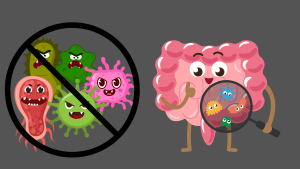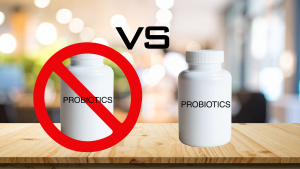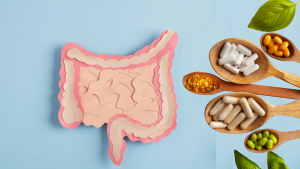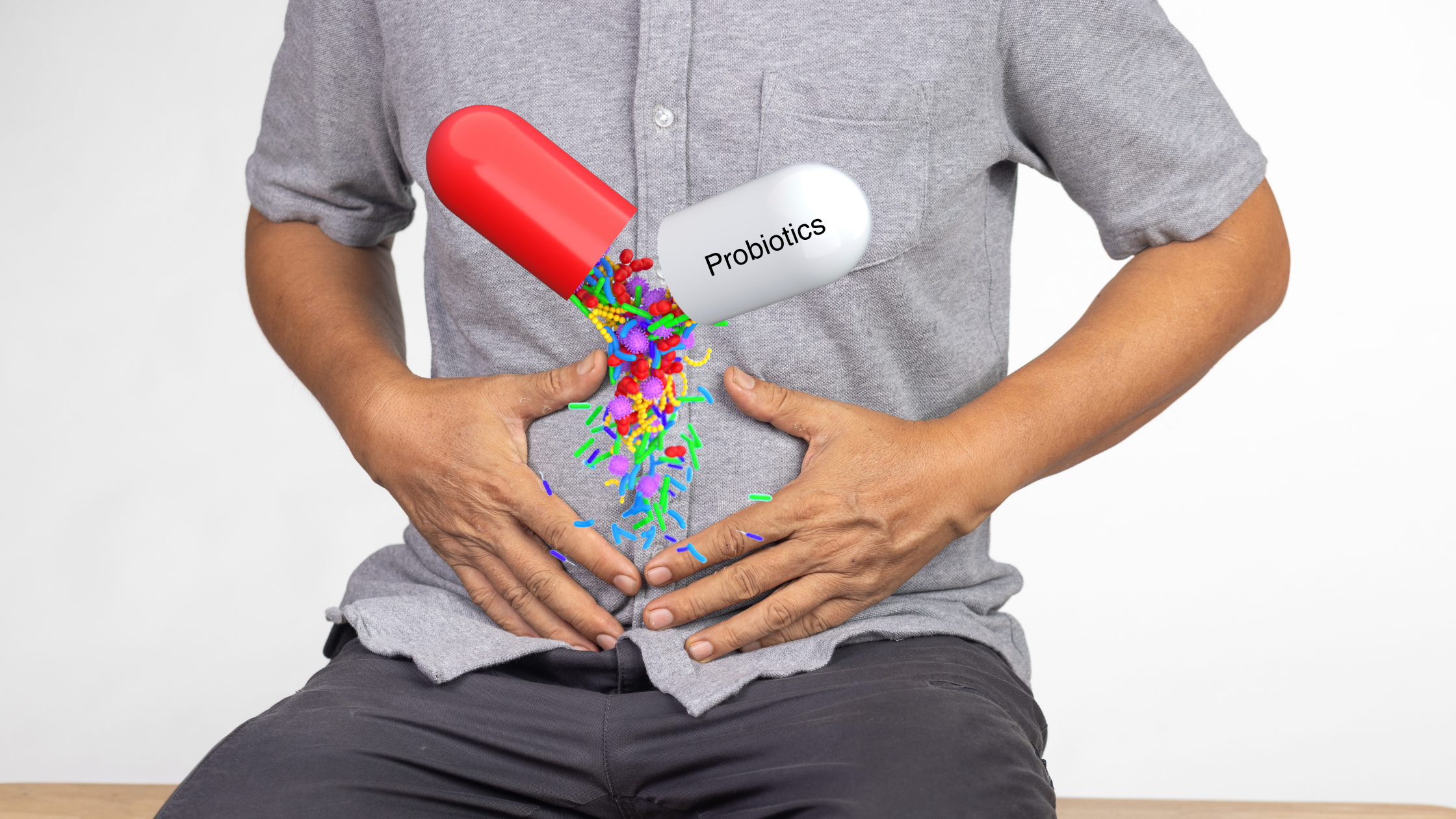
When undergoing a course of antibiotics, whether for Small Intestinal Bacterial Overgrowth (SIBO) or another infection, it is crucial to consider the role of probiotics and Saccharomyces boulardii in maintaining gut health. Antibiotics, while effective at killing harmful bacteria, do not discriminate between the good and bad bacteria in the gut, often leading to disruptions in the gut microbiome. This disruption can cause a range of side effects, including diarrhea, gut inflammation, and even pave the way for opportunistic infections like Clostridium difficile (C. difficile). Incorporating probiotics and Saccharomyces boulardii during and after antibiotic treatment can help mitigate these risks and support overall gut health.
Rifaximin is the preferred antibiotic to use against SIBO. Due to its minimal systemic absorption, Rifaximin is uniquely positioned to primarily act within the gastrointestinal tract. This characteristic makes it less likely to disrupt the overall gut microbiome and more effective in treating SIBO in the lower small intestines compared to more systemically absorbed antibiotics. As a result, the risk of developing C. difficile infection while taking Rifaximin alone is considered relatively low.
Reasons Why C. difficile Infection Risk is Lower with Rifaximin
Minimal Systemic Absorption
Many antibiotics cause broad-spectrum depletion of the gut microbiome, predisposing it to C. difficile overgrowth. Rifaximin is poorly absorbed from the gastrointestinal tract, meaning it primarily remains within the gut to exert its effects. This localized action reduces the disruption of beneficial gut bacteria that occurs with systemically absorbed antibiotics.
Selective Antimicrobial Activity
Rifaximin is less disruptive to the gut microbiome than many other antibiotics. By selectively targeting pathogenic bacteria within the gut, Rifaximin spares much of the normal flora. Therefore, Rifaximin maintains the integrity of the gut environment that helps prevent C. difficile colonization and overgrowth.
Reduced Risk of Resistance
Rifaximin has a lower propensity for inducing antibiotic resistance compared to other antibiotics. It is effective against many Gram-positive and Gram-negative bacteria, but its mechanism of action and low systemic absorption minimize the development of resistant strains that could contribute to secondary infections like C. difficile.
Increased Risk with Neomycin
When Rifaximin is paired with Neomycin, the risk of C. difficile infection can potentially increase. Neomycin is commonly paired with Rifaximin in cases of methane positive SIBO due to its significantly improved treatment outcomes (up to 30% greater than Rifaximin alone). Neomycin is a broad-spectrum antibiotic that can significantly disrupt the gut microbiota, reducing the population of beneficial bacteria that typically help keep C. difficile in check. This disruption creates an environment where C. difficile can flourish, increasing the risk of infection.
Key Points:
- Rifaximin Alone: The risk of C. difficile infection is low due to its localized effect in the gut and minimal systemic absorption. Rifaximin is less likely to disrupt the gut’s beneficial bacteria, which helps prevent C. difficile overgrowth.
- Rifaximin + Neomycin: The combination increases the risk of C. difficile infection. Neomycin, being more disruptive to the gut microbiome, can create conditions conducive to C. difficile proliferation. While combining these antibiotics is often effective for treating methane-dominant SIBO, the increased risk of C. difficile infection must be carefully considered.
Probiotic Support in SIBO
Probiotics are live microorganisms that, when administered in adequate amounts, confer a health benefit to the host. During antibiotic treatment, probiotics can help replenish the beneficial bacteria that antibiotics often deplete. This is especially important in maintaining a balanced gut microbiome, which is essential for healthy digestion, immune function, and overall well-being. Probiotics like Lactobacillus and Bifidobacterium species have been shown to reduce antibiotic-associated diarrhea, a common side effect of antibiotic therapy.
However, the use of probiotics in the context of SIBO is more complex. SIBO is characterized by an overgrowth of bacteria in the small intestine, so introducing more bacteria via probiotics might seem counterintuitive. Yet, certain strains of probiotics have been found to be beneficial in managing SIBO symptoms. These strains work by:
- Outcompeting harmful bacteria
- Producing antimicrobial substances
- Enhancing gut motility
Additionally, probiotics can help restore the balance of gut flora after the bacterial overgrowth has been reduced by antibiotics, potentially reducing the risk of SIBO recurrence.
Timing of probiotics when taking antibiotics is important. Traditional probiotics must be taken 2-hours away from antibiotics to prevent the antibiotic from killing the beneficial probiotics and the probiotics from reducing the antibiotics efficacy. Taking a probiotic at bedtime (2-hrs away from the evening antibiotic dose) is preferred.
Saccharomyces boulardii for SIBO
Saccharomyces boulardii, a beneficial yeast, plays a particularly important role when taking antibiotics. Unlike bacterial probiotics, S. boulardii is not affected by antibiotics, allowing it to remain active in the gut even during treatment. It has been shown to protect against antibiotic-associated diarrhea and C. difficile infections in multiple ways:
- Inhibiting the growth of pathogenic bacteria
- Enhancing the immune response
- Promoting the production of short-chain fatty acids that nourish the gut lining.
For individuals with SIBO, S. boulardii can be especially valuable as it helps to restore gut health without contributing to bacterial overgrowth.
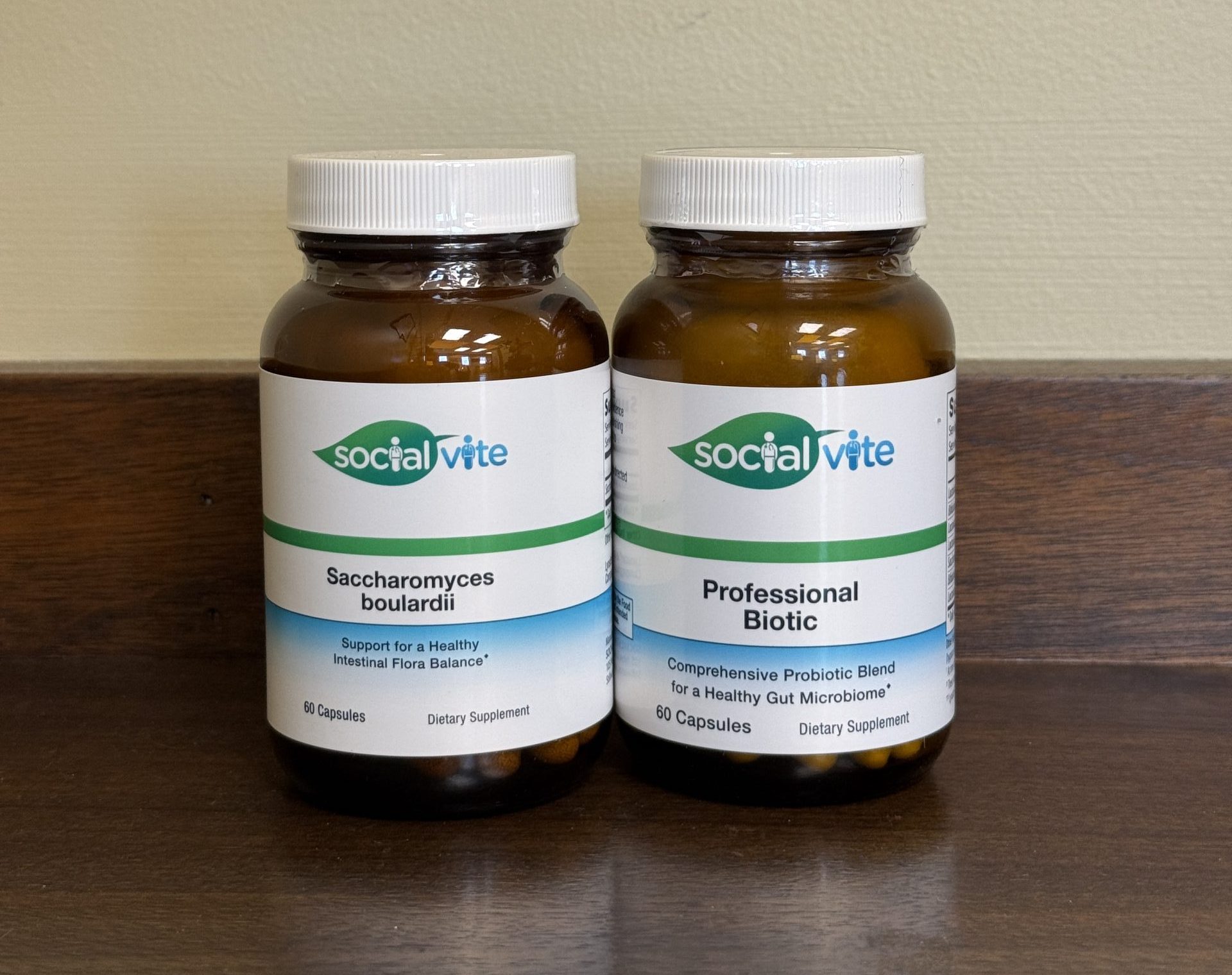
Saccharomyces boulardii is not a bacteria, therefore it is safe to take at the same time as antibiotics. Rifaximin is typically taken three times daily, so taking S. boulardii with the morning and evening dose is common.
Summary
In summary, while the use of probiotics in SIBO treatment requires careful consideration, the combination of probiotics and S. boulardii with antibiotic therapy is generally beneficial for:
- Supporting gut health
- Reducing side effects
- Preventing the recurrence of infections.
Their ability to restore balance to the gut microbiome and provide protective effects against antibiotic-associated disruptions makes them a valuable addition to any antibiotic regimen, including for those dealing with SIBO.
For more about how Dr. Bradley Bush addresses SIBO, check out these blogs: Two Step SIBO Treatment, Herbal Protocols, and Ranking SIBO Antibiotics. Become a Neurovanna healthcare provider for more tips on addressing SIBO.
Disclaimer: The information on this site is for educational purposes only. Individual results may vary. Patients should consult with their healthcare providers before taking any interventions.
References
Torre A, Córdova-Gallardo J, Frati Munari AC. Rifaximin Alfa and Liver Diseases: More Than a Treatment for Encephalopathy, a Disease Modifier. Ther Clin Risk Manag. 2023 Oct 24;19:839-851. doi: 10.2147/TCRM.S425292. PMID: 37899985; PMCID: PMC10612522